


About Jasmine Mao Jian
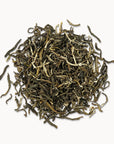
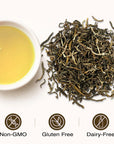
Fresh jasmine flowers lend this famous Chinese Jasmine Mao Jian green tea its distinctively aromatic flavour and scent. The jasmine flowers are layered over the tea overnight, and as the flowers open, a delicate, seductive fragrance permeates the tea leaves. This traditional process is repeated up to eight times, infusing the tea leaves with the finest aromas. Our Jasmine Mao Jian Green Tea is characterised by its fresh, delicate taste—a masterful delicacy.
About Mao Jian
This tea variety is called Mao Jian or "Downy Tip" because the small hairs on the young leaves are a sign of the highest quality. Mao Jian means "Hair Tips." Like all high-quality Chinese green teas, the leaves for Mao Jian are harvested in the first days of April.
Cultivation
To achieve its special delicacy, only the first and second leaves of a young shoot are picked for this green tea. Since the green tea is typically harvested in spring and the jasmine blooms only in summer, the partly dried tea must be stored for several weeks in a cool and dark place. Once the jasmine flowers are available, the flower buds are collected and carefully mixed with the tea leaves.
Effects
Green tea has an invigorating effect. The health benefits of tea have been well-known for a long time: the tannins calm the stomach and intestines, the antibacterial effect of green tea helps prevent tooth decay, and it regulates blood pressure. Additionally, green tea supports the immune system and can contribute to general well-being.
How to enjoy
Enjoy our Jasmine Mao Jian neat in the morning or offer it to your guests as a welcome. Jasmine tea pairs excellently with rice dishes and light, crisp salads.
Aroma: A rich, vibrant, and ethereal burst of fresh jasmine blossoms that greets you the moment the tea meets hot water.
Palate: Elegant and clean on the entrance, revealing a delicate floral sweetness tightly interwoven with the crisp notes of tender spring green tea.
Finish: Smooth and beautifully rounded, ending with a deep, mellow, and long-lasting sweet aftertaste (huigan) that refreshes the entire palate.
Jasmine is originally native to India and was introduced to Fuzhou, China, during the Western Han Dynasty via the overland and maritime Silk Roads. This led to the development of scenting green tea with jasmine flowers, making Fuzhou, Fujian, the birthplace of jasmine tea.
The blend of tea and jasmine aromas earned it the reputation: "Scenting brings out the ultimate taste of jasmine, making it the supreme fragrance among mankind." The complex scenting process was perfected during the Ming Dynasty, and jasmine tea later became an imperial tribute tea during the Qing Dynasty.